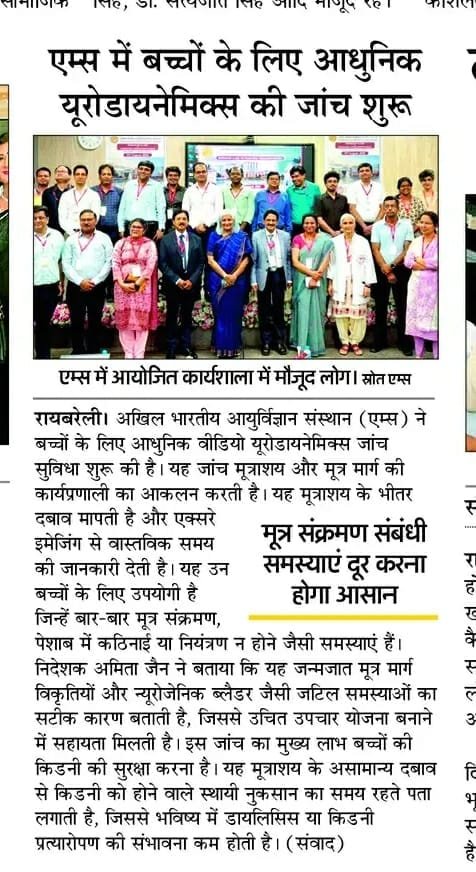
Paediatric VideoUrodynamics Workshop 2026 at AIIMS Raebareli: Dr. Prabhu Karunakaran Delivers a Keynote Lecture on Urodynamics in Neurogenic Bladder
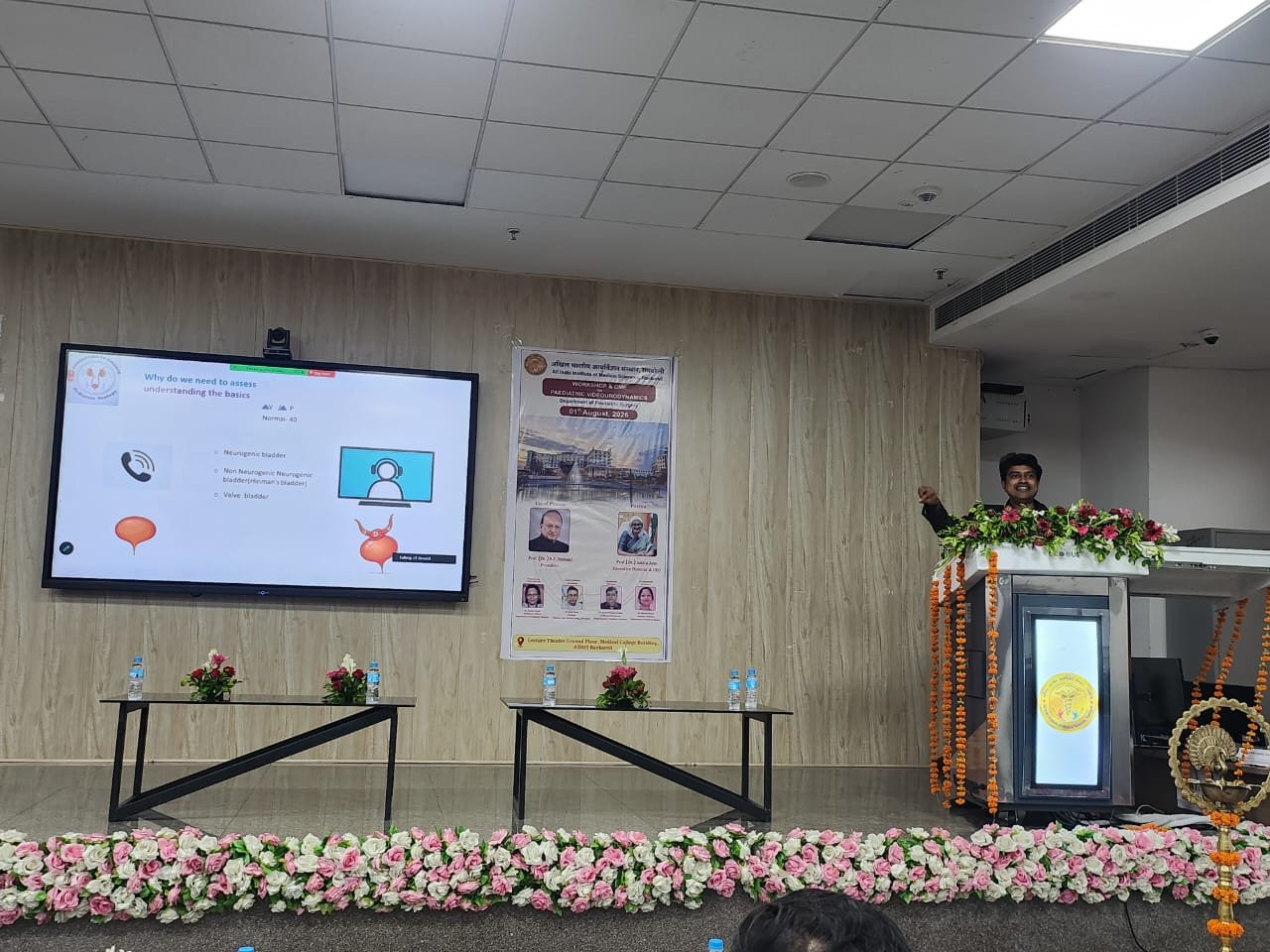
The Workshop & CME on Paediatric VideoUrodynamics, held at AIIMS Raebareli on 1 August 2026, brought together specialists from paediatric surgery, paediatric urology, nephrology, rehabilitation and related disciplines for a focused academic programme on the evaluation and management of lower urinary tract dysfunction in children. Organised by the Department of Paediatric Surgery, AIIMS Raebareli, the workshop combined foundational teaching, practical discussions, live demonstrations and advanced approaches to paediatric urodynamic assessment.
A key focus of the workshop was the contribution of Dr. Prabhu Karunakaran, Paediatric Urologist at Apollo Hospitals, Hyderabad, who addressed the clinical classification of neurogenic bladders and its correlation with video urodynamic findings. His session, titled “Classification of Neurogenic Bladders – Clinical & Video Urodynamics Correlation,” examined how clinical assessment and real-time video urodynamics can be interpreted together to develop a more complete understanding of bladder function in children.
Understanding Neurogenic Bladder Beyond Clinical Classification
In children with neurogenic bladder, the clinical history and neurological examination can provide an important starting point. However, the functional behaviour of the bladder may not always correspond neatly to a textbook classification.
Dr. Prabhu Karunakaran’s presentation explored this gap between the initial clinical impression and the information revealed by video urodynamics.
His approach emphasised using the clinical assessment to formulate a working diagnosis and then using video urodynamics to confirm, refine or, when necessary, challenge that initial assessment. The workshop material highlights the importance of real-time assessment of bladder filling, voiding and sphincter behaviour in developing a more complete understanding of the child’s lower urinary tract function. The session covered core neurogenic bladder classification systems, their limitations in day-to-day practice, and the risks of relying too heavily on symptoms or on a single urodynamic parameter.
Bridging the Gap Between Clinical Findings and Video Urodynamics
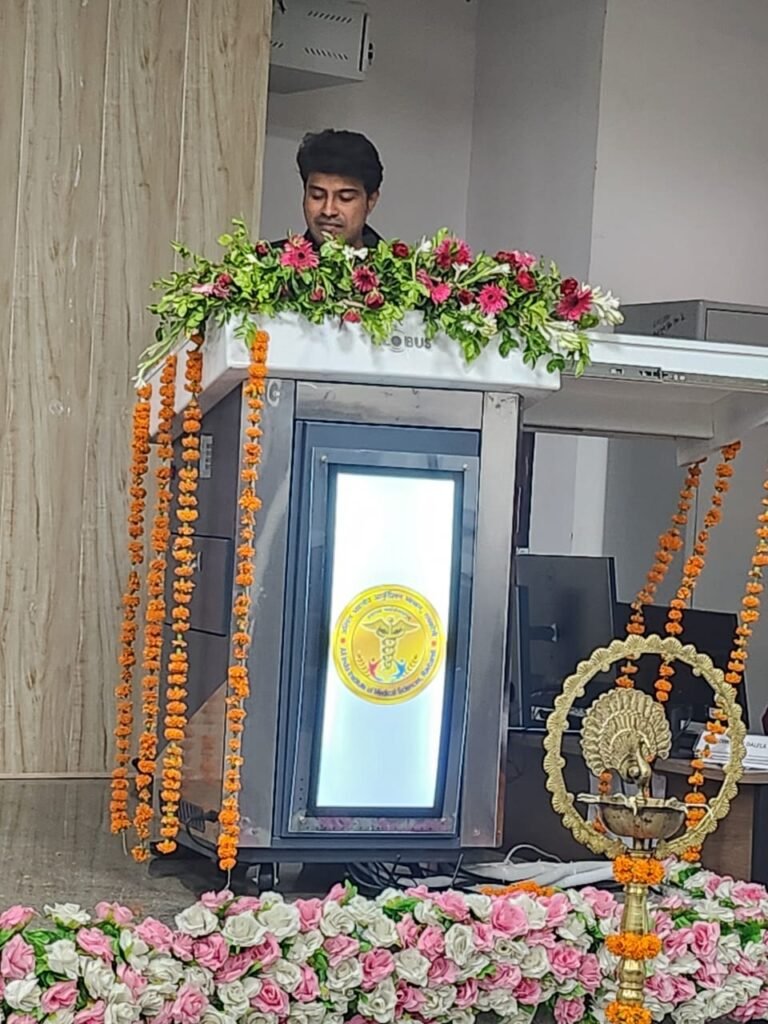
One of the most important themes of Dr. Prabhu Karunakaran’s session was the need to interpret video urodynamic findings correlatively rather than in isolation. The discussion addressed how clinicians can match detrusor behaviour, bladder neck function and sphincter activity observed during video urodynamics with the clinical classification of a child. This distinction matters because a clinical label alone may not capture the complete functional picture. For trainees, paediatric surgeons, urologists and urodynamic technicians, the practical value lies in learning how to move from:
clinical history → neurological assessment → working classification → urodynamic observation → integrated interpretation → management planning
The workshop document notes that Dr. Prabhu Karunakaran used case-based examples from his practice to demonstrate how this correlation could directly influence management decisions, ranging from conservative treatment strategies to surgical planning. That emphasis makes the session particularly relevant to clinicians who are establishing, expanding or refining a paediatric urodynamics service.
Why Video Urodynamics Matters in Children With Neurogenic Bladder
The importance of accurate assessment becomes clearer when the long-term consequences of neurogenic bladder are considered.
Neurogenic bladder in children may be associated with conditions including spina bifida, spinal cord anomalies and other neurological disorders. Its management has implications not only for urinary symptoms and continence, but also for renal preservation and quality of life.
This is why video urodynamics can be particularly valuable in paediatric neuro-urology. The objective is not simply to obtain numbers or assign a diagnostic category, but to understand how the bladder, bladder neck and sphincter are functioning in a way that can support an appropriate treatment strategy.
For families, this ultimately translates into a more important goal: making decisions that protect the child’s urinary system and support long-term continence and quality of life.
A Broader Academic Programme at AIIMS Raebareli
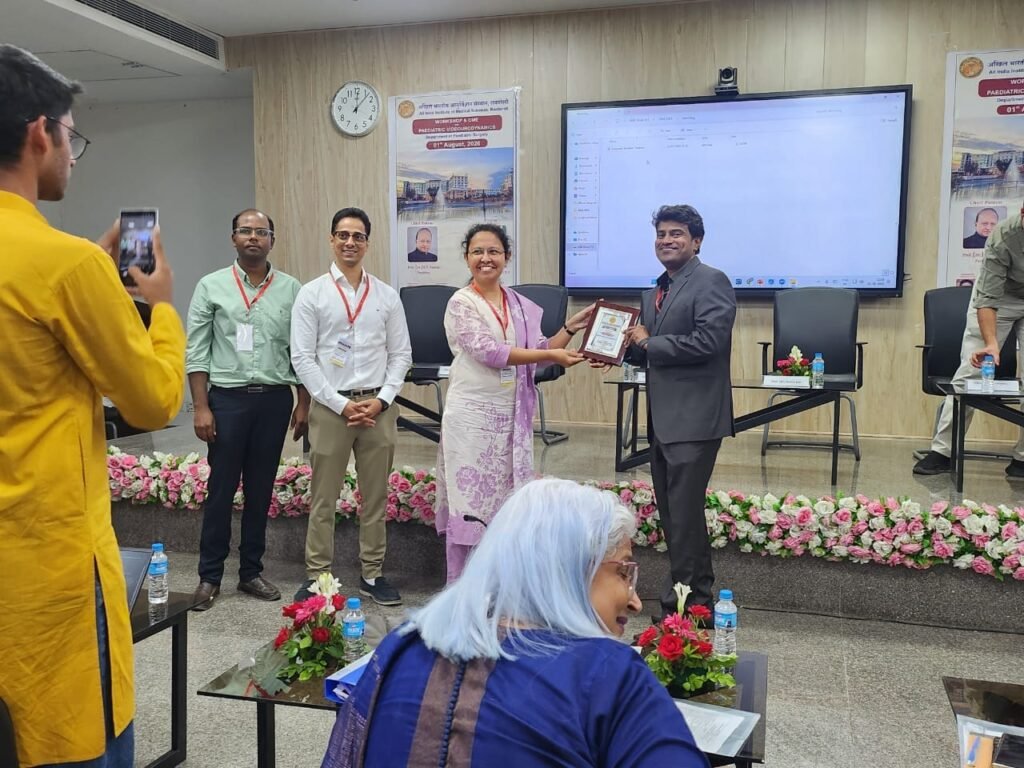
Dr. Prabhu Karunakaran’s session was part of a broader national academic programme organised by the Department of Paediatric Surgery, AIIMS Raebareli, bringing together faculty and participants from paediatric surgery, urology and related specialties. The official programme included experts from institutions such as KGMU Lucknow, SGPGI Lucknow, RML Lucknow and MAMC New Delhi, with Dr. Karunakaran among the invited faculty.
The workshop was designed to move beyond the basic performance of urodynamic studies and focus on their practical interpretation and clinical application. Sessions covered urinary sphincteric anatomy, neurogenic bladder evaluation, urodynamic terminology and abnormalities, setting up and functioning of a urodynamic laboratory, early intervention in spina bifida, bladder dynamics after urethroplasty and real-time video urodynamic learning.
The programme subsequently explored the medical and surgical management of neurogenic bladder, including current pharmacological approaches, surgical decision-making in urinary incontinence, case-based discussions and troubleshooting in urodynamics. Dedicated sessions also addressed biofeedback in paediatric voiding dysfunction and neuromodulation of urinary sphincter control.
Later discussions focused on emerging areas such as intravesical monitoring of bladder dynamics, functional near-infrared spectroscopy, complex case challenges and research involving bladder cytometry and urodynamic correlation in neural tube defects. The academic programme concluded with the Academic Meet of the Society of Lucknow Paediatric Surgeons, followed by a cultural evening and gala dinner.
From Urodynamic Assessment to Better Clinical Decisions
The central message emerging from Dr. Prabhu Karunakaran’s session was that video urodynamics becomes most meaningful when its findings are interpreted alongside the clinical picture.
For children with neurogenic bladder, the distinction is particularly important. A classification based on symptoms and neurological findings may provide a starting point, but the actual behaviour of the bladder, bladder neck and sphincter during urodynamic assessment can add information that changes how the child is understood and managed. The workshop material specifically highlights the importance of using this correlation to guide decisions ranging from conservative treatment to surgical planning.
The practical nature of the session also reflected the wider objective of the AIIMS Raebareli workshop: helping clinicians develop greater confidence in paediatric urodynamics, interpretation of pressure-flow studies, troubleshooting and multidisciplinary management of lower urinary tract dysfunction in children.
For paediatric urologists, surgeons, residents and urodynamic teams, this approach reinforces an important principle: the purpose of urodynamic assessment is not simply to generate measurements, but to use those findings alongside the child’s clinical history to support better-informed decisions.
Dr. Prabhu Karunakaran’s participation at the AIIMS Raebareli workshop therefore contributed to a wider academic conversation around neurogenic bladder in children, video urodynamics and the clinical interpretation of lower urinary tract dysfunction—with the ultimate focus remaining on long-term bladder health, continence and preservation of the urinary system.