

Testicular Torsion in children: When Every Minute Matters – Dr Prabhu Karunakaran, consultant Pediatric Urologist.
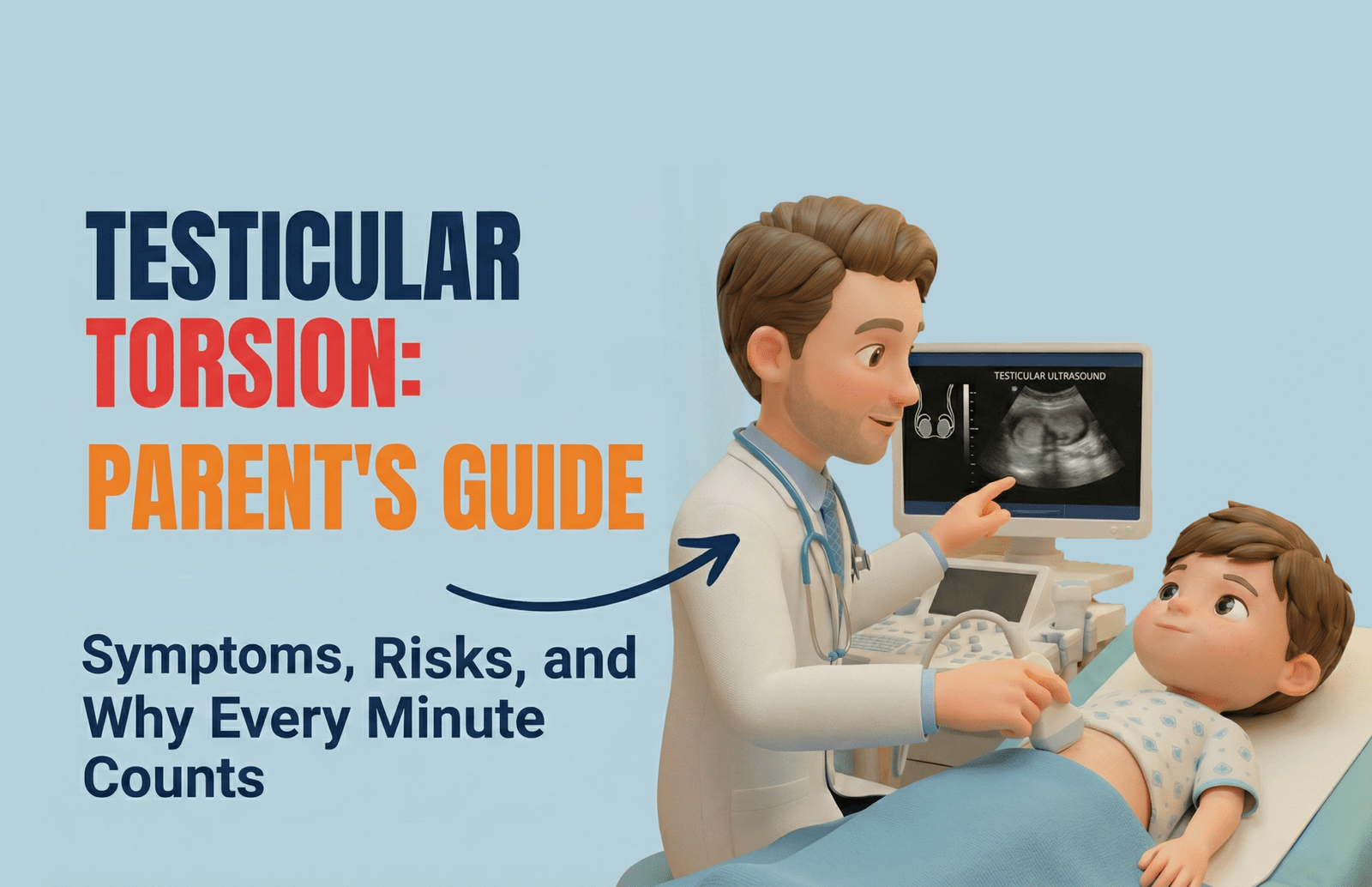
Testicular pain is never something to ignore—especially when it comes on suddenly. One condition, in particular, demands immediate attention: Testicular Torsion. Understanding what it is, how it happens, and when to act can make a critical difference.
What Is Testicular Torsion?
Testicular torsion occurs when the spermatic cord, which supplies blood to the testicle, twists unexpectedly. This twist cuts off blood flow almost instantly. The result is sudden, intense pain, rapid swelling, and often a sense that “something is very wrong.”
This is not a condition that improves with rest or medication. Testicular torsion is a true surgical emergency. Without prompt treatment, the testicle can suffer permanent damage, and delayed care may lead to its removal.
While torsion can occur at any age—even in newborns—it is seen most often in boys and young men between 10 and 25 years, particularly around puberty.
Why Does Testicular Torsion Happen?
Inside the scrotum, each testicle is normally anchored in place while hanging from the spermatic cord. In many boys with testicular torsion, this natural attachment is missing due to a congenital condition called the bell-clapper deformity. When this support is absent, the testicle can rotate freely—making a sudden twist much more likely. Torsion can occur:- During or after physical activity
- While sleeping
- After a direct injury to the scrotum
Recognizing the Symptoms
Testicular torsion usually announces itself clearly—and urgently. Seek immediate medical care if your child experiences:- Sudden, severe pain in one testicle or the groin
- Rapid swelling on one side of the scrotum
- Nausea or vomiting
- Lower abdominal pain
- A testicle that appears higher than normal or tilted at an unusual angle
How Is Testicular Torsion Diagnosed?
A pediatric urologist begins with a focused physical examination. In many cases, an ultrasound with Doppler imaging is used to check blood flow to the testicle. Blood and urine tests may help rule out infection when the diagnosis is uncertain. However, when the clinical signs strongly point to torsion, the doctor may proceed directly to emergency surgery. Delaying treatment for additional tests can risk permanent damage. Why the urgency?- Within 6 hours: up to 90% chance of saving the testicle
- After 12 hours: chance drops to about 50%
- After 24 hours: chance falls to roughly 10%
How Is Testicular Torsion Treated?
The definitive treatment for testicular torsion is urgent surgery. In rare situations, a doctor may temporarily untwist the testicle manually, but this is not a final solution. Surgery is still required to prevent recurrence. During the procedure:- Your child is placed under general anesthesia
- A small incision is made in the scrotum
- The spermatic cord is untwisted to restore blood flow
- Both testicles are secured to the scrotal wall (orchidopexy) to prevent future torsion
Key Takeaways:
- Sudden testicular or groin pain is never normal.
- Acting quickly can mean the difference between saving and losing a testicle.
- When it comes to testicular torsion, minutes truly matter.
- If your child complains of sudden scrotal pain, do not wait. Consult a trained Pediatric Urologist
Book a Consultation
For expert pediatric urology care and robotic surgery in Hyderabad:
 Visit: https://drprabhukarunakaran.com/appointment/
 WhatsApp: 8500550328 or
  Call: 8500550328