

Pediatric Ureteroscopy in a 2-Year-Old Without a Ureteroscope: A Novel Approach to Treating Ureteric Stones
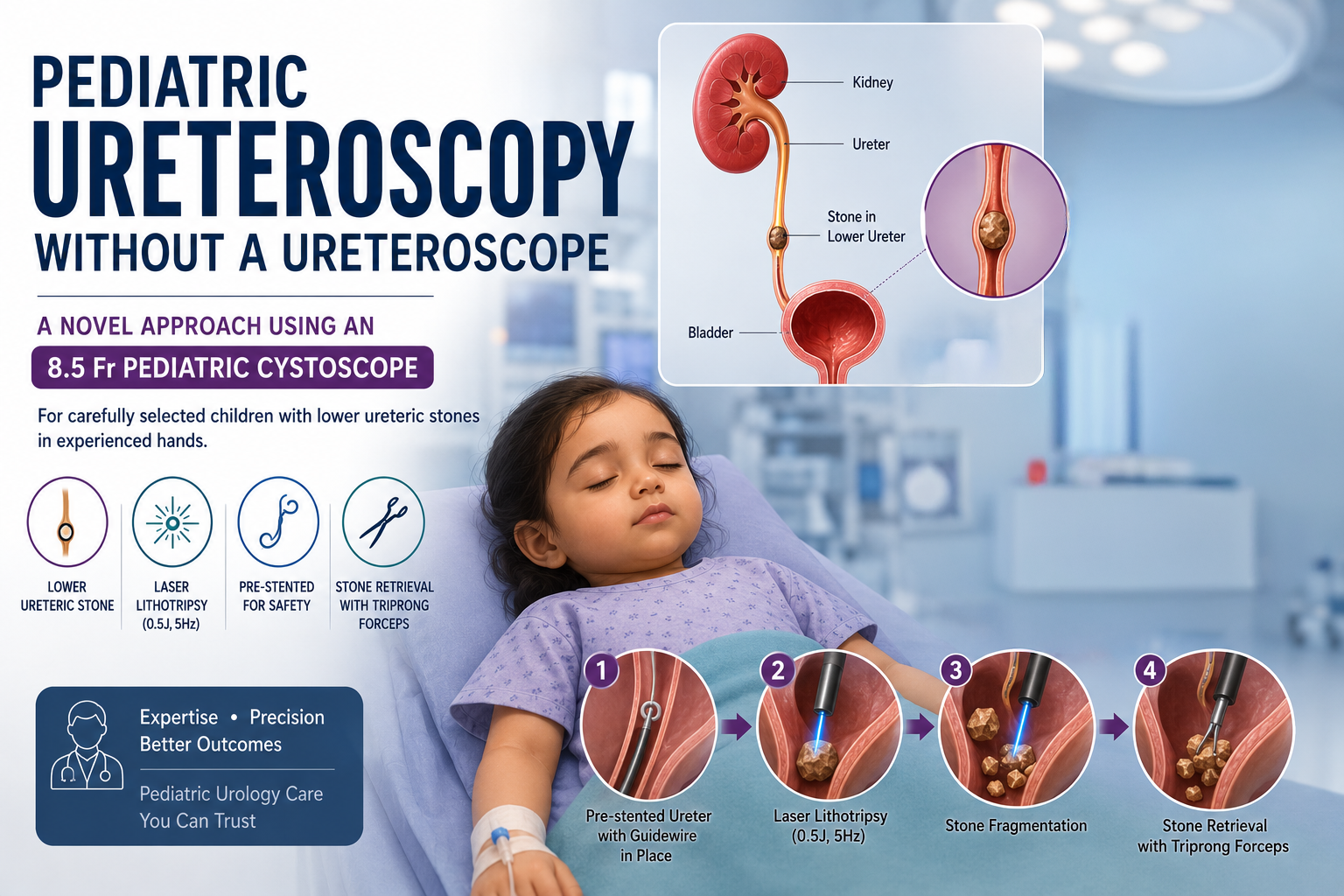
Treating ureteric stones in very young children presents unique challenges. The small size of the pediatric urinary tract often requires specialized instruments, such as a pediatric ureteroscope, which may not always be readily available. In carefully selected cases, however, alternative approaches can be considered by experienced pediatric urologists.
In this case, Dr. Prabhu Karunakaran, Consultant Pediatric Urologist, demonstrates how a 2-year-old child with a lower ureteric stone was treated using an 8.5 Fr pediatric cystoscope instead of a dedicated pediatric ureteroscope. The video showcases an innovative endoscopic technique that may be considered in selected pediatric patients when performed by surgeons with appropriate expertise.
Understanding Ureteric Stones in Children
Ureteric stones are hard mineral deposits that become lodged within the ureter—the tube that carries urine from the kidney to the bladder. Although they are less common in children than in adults, they can occasionally require endoscopic treatment when conservative management is unsuccessful.
The management of ureteric stones in children differs significantly from adults because of the smaller anatomy of the urinary tract. Careful patient selection, specialized equipment, and meticulous surgical technique are essential for achieving successful outcomes.
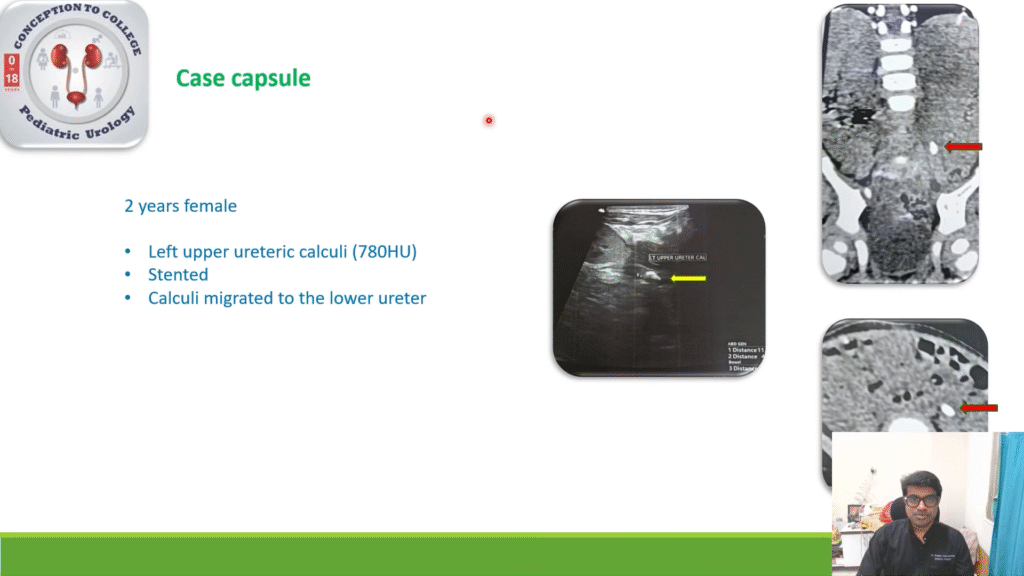
Case Presentation: A 2-Year-Old Child with a Migrating Ureteric Stone
How the Procedure Was Performed
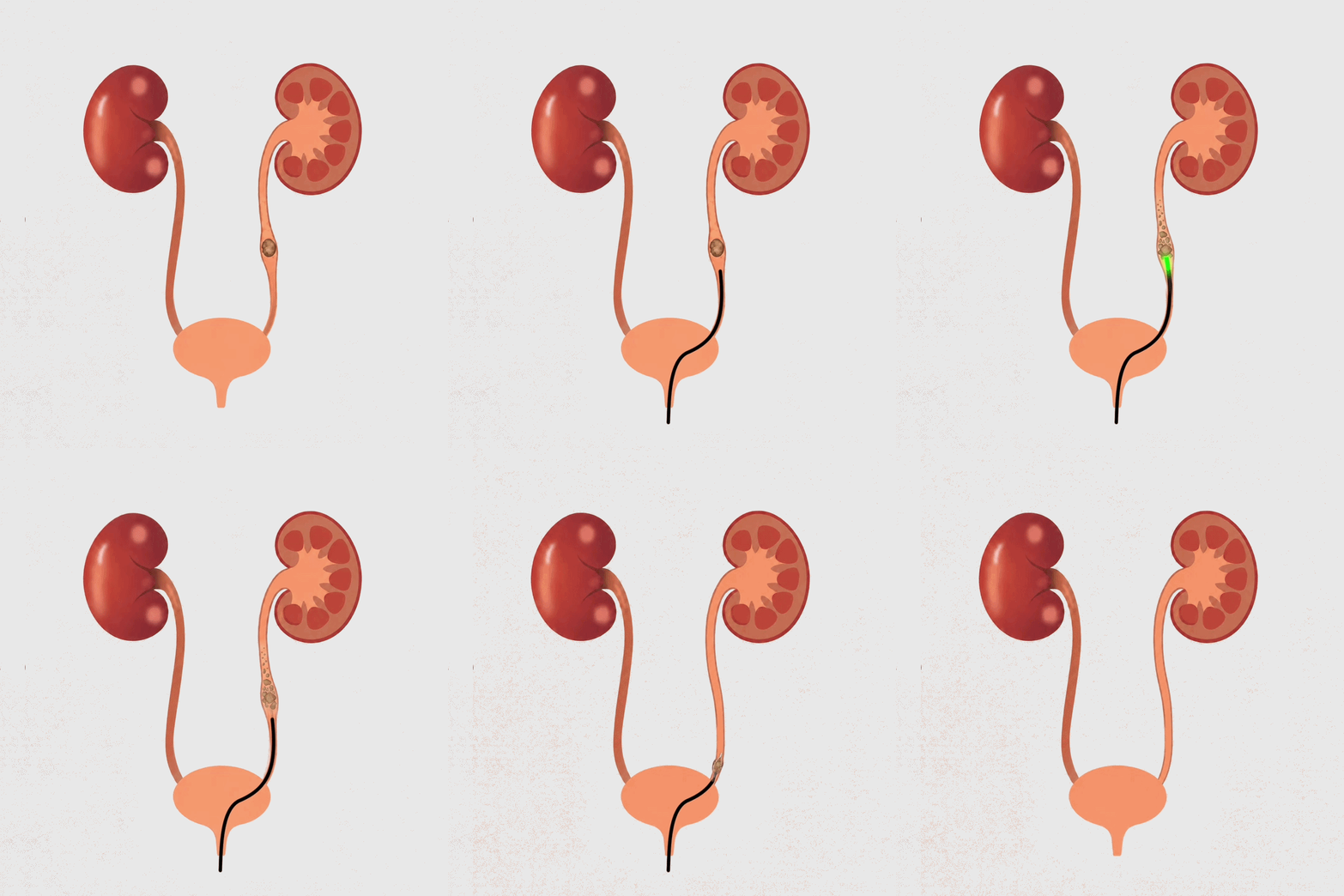
The procedure was carried out under general anesthesia using a systematic and carefully planned approach.
1. Patient Preparation
The child was positioned in the lithotomy position, and bladder drainage was established to provide adequate venting during the procedure and facilitate clear endoscopic visualization.
2. Guidewire Placement
A guidewire was first advanced into the ureter before introducing the cystoscope.
According to Dr. Prabhu, the guidewire serves multiple purposes:
- Provides a safe pathway for instrument insertion
- Stabilizes the ureter
- Minimizes stone mobility during laser fragmentation
This step helps improve procedural control throughout the surgery.
3. Pre-stenting
An important point emphasized by Dr. Prabhu is that children undergoing this technique are pre-stented. Pre-stenting helps facilitate safe access to the ureter and is an important consideration when performing this specialized procedure in carefully selected pediatric patients.
4. Laser Lithotripsy
Once the stone was visualized, laser lithotripsy was performed using low-energy settings appropriate for the pediatric ureter.
The laser settings used were:
- Energy: 0.5 Joules
- Frequency: 5 Hz
- Power: Approximately 2.5 Watts
The laser fiber was directed precisely at the center of the stone to maximize fragmentation while minimizing the risk of injury to the surrounding ureteral wall.
5. Stone Retrieval
After successful fragmentation, the stone fragments were removed using triprong grasping forceps.
The fragments were retrieved carefully to achieve complete stone clearance before concluding the procedure.
Advantages of Using an 8.5 Fr Pediatric Cystoscope Instead of a Ureteroscope
According to Dr. Prabhu, using an 8.5 Fr pediatric cystoscope offers several practical advantages in carefully selected pediatric patients.
1. Better Equipment Availability
An 8.5 Fr pediatric cystoscope is readily available in most pediatric surgical units, making it a practical option when a dedicated pediatric ureteroscope is unavailable.
2. Excellent Visualization
The pediatric cystoscope provides excellent endoscopic visualization, allowing clear identification of the stone and precise laser targeting throughout the procedure.
3. Larger Working Channel
The cystoscope has a larger working channel, making it easier to manipulate the laser fiber and triprong grasping forceps during stone fragmentation and retrieval.
4. Easier Maneuverability
Because the pediatric cystoscope is approximately 15 cm long, it is easier to maneuver within the shorter ureters of carefully selected young children.
Limitations of This Technique
While the procedure was successfully performed in this case, Dr. Prabhu emphasizes that this technique should not be considered a replacement for standard pediatric ureteroscopy. Instead, it should only be performed in carefully selected cases by experienced pediatric urologists.
Requires Significant Surgical Expertise
Dr. Prabhu advises that this technique should not be attempted without sufficient expertise in pediatric endourology, as careful instrument handling is essential for safe ureteral access and stone treatment.
Suitable Only for Selected Children
This approach is feasible only in a small proportion of young children, particularly those whose ureter length is approximately 15 cm, allowing the pediatric cystoscope to be advanced safely.
Stone Location Is Critical
The technique is most suitable when the stone is located in the lower ureter, where the pediatric cystoscope can be used effectively for laser lithotripsy and stone retrieval.
When Can This Technique Be Considered?
Based on Dr. Prabhu Karunakaran’s operative experience, this technique may be considered when:
- A dedicated pediatric ureteroscope is unavailable.
- The child is carefully selected and appropriately pre-stented.
- The ureter length is suitable for the procedure (approximately 15 cm).
- The stone is located in the lower ureter.
- The procedure is performed by an experienced pediatric urologist.
Careful patient selection and surgical expertise remain essential when considering this approach.
Key Takeaways
- A 2-year-old child with a migrating ureteric stone was successfully treated using an 8.5 Fr pediatric cystoscope.
- The procedure utilized low-energy laser lithotripsy (0.5 J, 5 Hz) to fragment the stone while minimizing ureteral injury.
- Stone fragments were retrieved using triprong grasping forceps.
- According to Dr. Prabhu, the pediatric cystoscope offers several practical advantages, including easy availability, excellent visualization, a larger working channel, and easier maneuverability in carefully selected young children.
- Dr. Prabhu Karunakaran emphasizes that this is a specialized technique intended only for carefully selected, pre-stented children, particularly those with lower ureteric stones, and it should only be performed by experienced pediatric urologists.