

Robotic Surgery in Children: Is It Pain-Free? Understanding Recovery, Comfort and the Benefits of Pediatric Robotic Surgery

When parents are told that their child may need surgery, their thoughts naturally turn to recovery. They want to know how quickly their child will feel comfortable again, when they can return to normal activities, and what the recovery journey will look like.
Modern robotic surgery is helping make that recovery smoother for many children. One of the most common questions parents ask is whether robotic surgery is painful and how comfortable their child will be after the procedure.
The Recovery Often Speaks for Itself
When parents hear the term “robotic surgery,” they often imagine sophisticated technology, advanced equipment, and highly precise surgical techniques.
While all of that is true, what matters most to families is what they see with their own eyes after surgery.
Many children who undergo robotic procedures are:
- Sitting up comfortably within a short period after surgery
- Moving around with confidence
- Eating and drinking normally
- Smiling, playing, and interacting with their parents
- Ready to go home much sooner than many families expect
In fact, it is not uncommon for children to be active and playful within 36 to 48 hours after surgery.
By 72 hours, many are already back at home, doing what children do best—playing, exploring, and enjoying their normal routine.
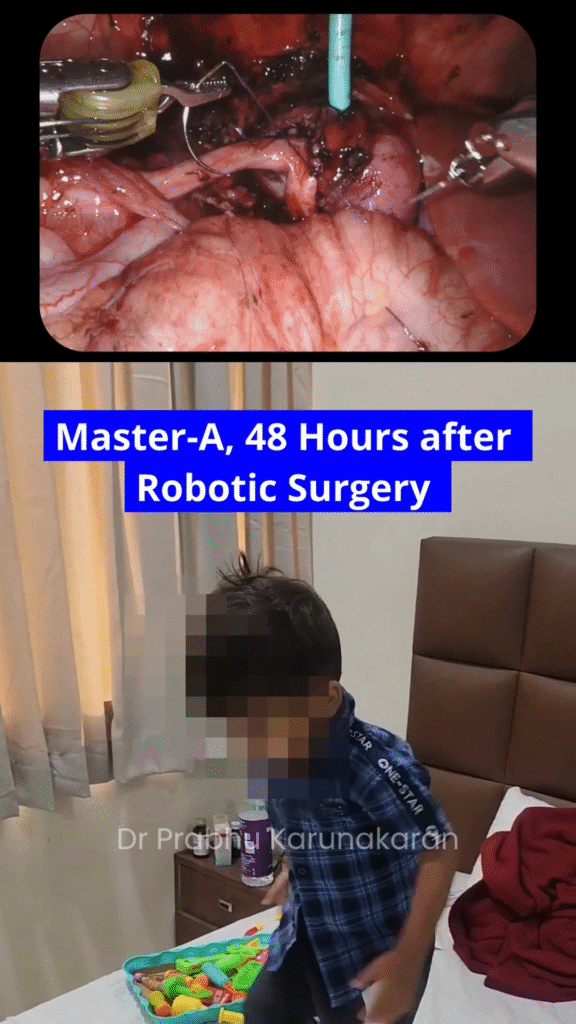
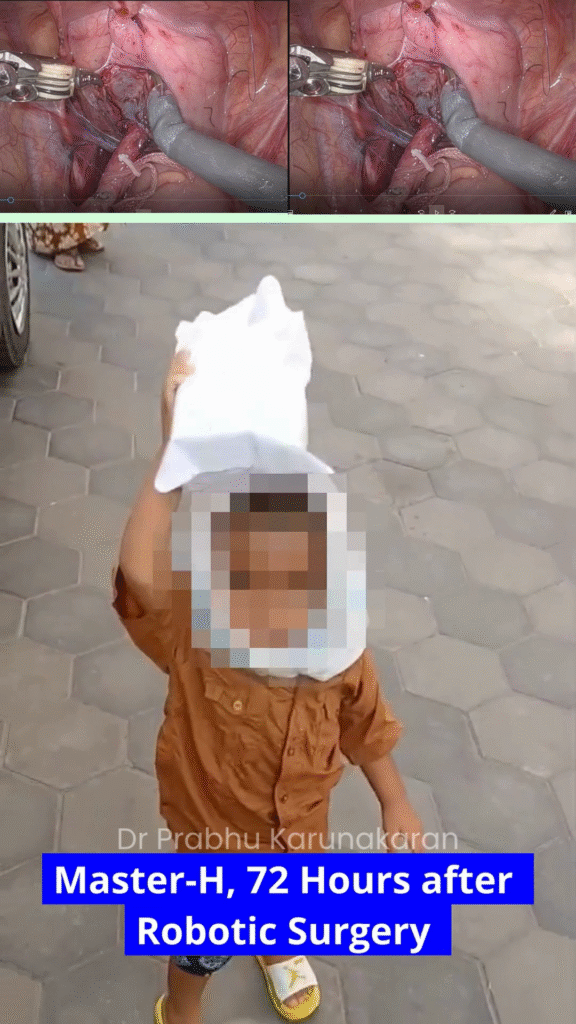
Why Does Robotic Surgery Cause Less Pain?
Robotic surgery is performed through very small incisions using highly advanced surgical instruments controlled by the surgeon.
The robotic platform provides:
- Magnified high-definition visualization
- Exceptional precision
- Greater freedom of movement for delicate surgical reconstruction
- Reduced tissue handling
- Smaller surgical incisions
Together, these advantages help minimize surgical trauma to the body. When tissues are handled more gently and surgical precision is enhanced, children often experience less postoperative discomfort and recover more comfortably.
Children Often Return to Their Normal Routine Quickly
One of the key advantages of robotic surgery is that it is performed through very small incisions with exceptional precision. Compared to traditional open surgery, this often results in less tissue disruption, reduced postoperative discomfort, and a more comfortable recovery experience for children.
As a result, many families are pleasantly surprised by how quickly their child begins returning to familiar activities after surgery. Parents frequently tell us that the most reassuring moment is seeing their child smile, play, interact with family, or ask for their favorite toy shortly after the procedure. While every child’s recovery journey is unique, the minimally invasive nature of robotic surgery often helps children regain confidence and return to their normal routine sooner. Those simple moments often mean more than any scan, report, or medical explanation.
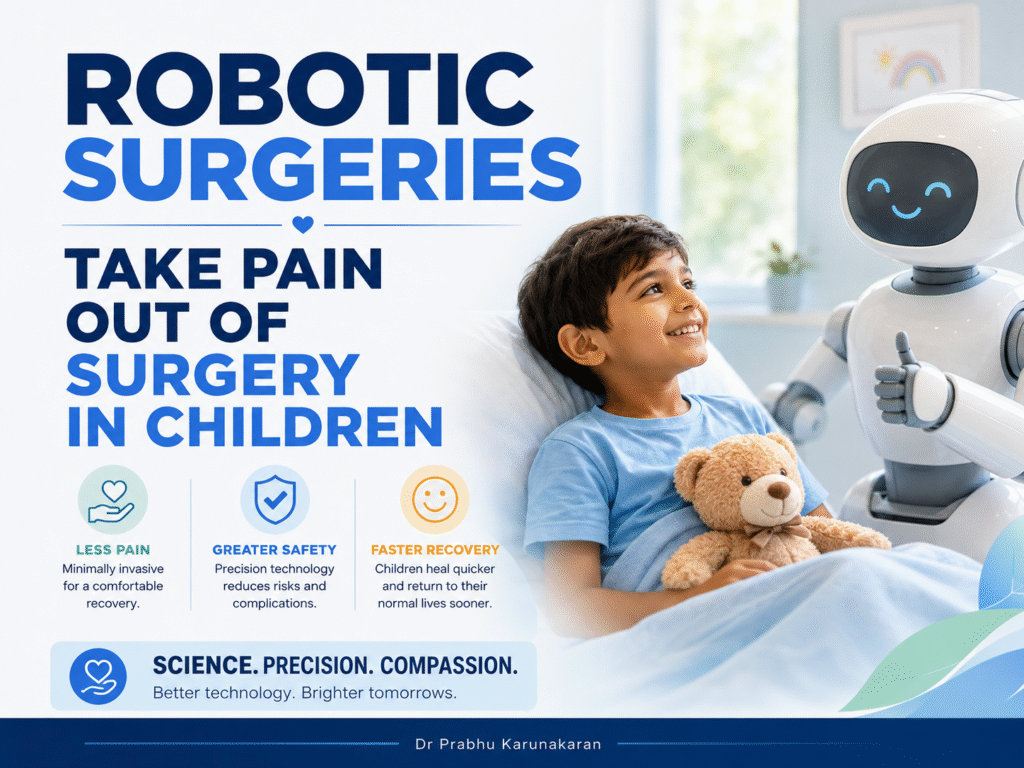
Technology Matters, But Experience Matters More
Robotic technology is an important advancement in pediatric surgery, but technology alone does not create good outcomes. Operating on infants and children requires specialized training, careful surgical planning, and extensive experience in pediatric anatomy. The robotic platform serves as a powerful tool that allows experienced pediatric surgeons to perform complex procedures with remarkable precision.
The real strength of robotic surgery lies in combining advanced technology with surgical expertise. Every child is different, and achieving the best outcome requires thoughtful decision-making before, during, and after surgery. The goal is always the same: safe surgery, effective treatment, minimal discomfort, and a smooth recovery for every child.
A New Era in Pediatric Surgery
Over the past decade, robotic-assisted surgery has transformed the way many pediatric urological conditions are treated.
Children undergoing procedures such as reconstructive kidney surgery, ureteric reimplantation, and other complex pediatric urological operations can now benefit from:
- Smaller scars
- Less postoperative discomfort
- Shorter hospital stays
- Faster return to normal activity
- Excellent surgical precision
For parents facing the possibility of surgery for their child, these advances offer reassurance that treatment can be both effective and gentle.
About Dr. Prabhu Karunakaran
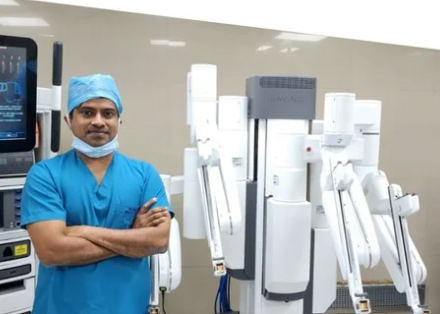
Dr. Prabhu Karunakaran is an Exclusive Pediatric Urologist in Hyderabad specializing in advanced pediatric urological care, minimally invasive surgery, and robotic-assisted pediatric urology.
His practice is dedicated exclusively to pediatric urology, providing specialized care for infants, children, and adolescents with conditions such as hypospadias, undescended testes, testicular torsion, vesicoureteral reflux (VUR), hydronephrosis, ureteropelvic junction (UPJ) obstruction, kidney and bladder disorders, pediatric urinary stone disease, and other complex urological conditions. He has a strong focus on advanced surgical care, minimally invasive techniques, robotic surgery, and long-term outcomes.
Watch the Video Here:
See how children are active, playful, and recovering comfortably within 36 to 48 hours after robotic surgery, and why modern robotic technology is transforming pediatric surgical care.